



What preceded the war in Ukraine: Relations with Russia after the collapse of the USSR
On August 24, 1991 the Parliament of Ukraine passed a resolution declaring the independence of Ukraine from the Union of Soviet Socialist Republics (USSR). Ukraine's independence was confirmed at the referendum held on December 1, 1991, when about 90% of voters voted for independence. The USSR formally ceased to exist on December 26, 1991. Along with the declaration of independence from the USSR, Ukraine strengthened its relations with NATO alliance. In December 1991, Ukraine joined the North Atlantic Cooperation Council, which was created as a forum for dialogue and cooperation with former Warsaw Pact countries. In the years that followed, Ukraine and NATO continued to develop relations, but this country did not become a formal member of the Alliance. The next significant event in the relations between Russia and Ukraine happened in December 1994, when the Memorandum on Security Guarantees was signed in connection with Ukraine's accession to the Treaty on the Non-Proliferation of Nuclear Weapons in Budapest. With this agreement, Ukraine renounced the nuclear weapons it inherited from the USSR, while the Russian Federation, the US and Great Britain were obliged not to undertake any activities against Ukraine, including the use of force. With this agreement, the nuclear weapons in the possession of Ukraine were transferred to Russia, which, for its part, committed to respect the borders, independence and sovereignty of Ukraine.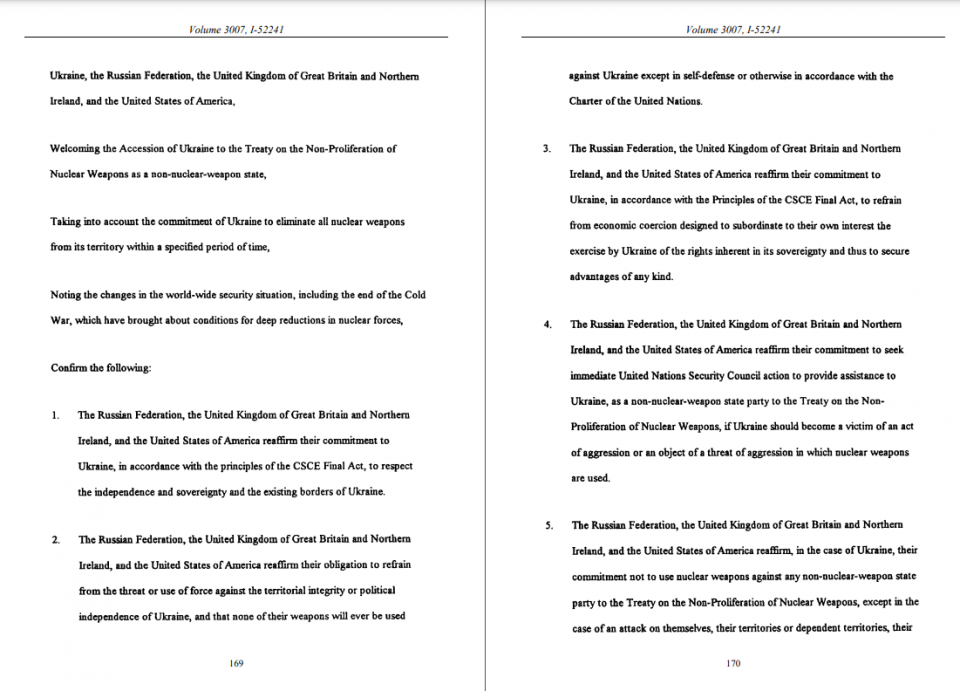 In the following decades, Russia did not make any incursions in Ukraine, but its political influence remained strong in that country. At the end of the 20th and the beginning of the 21st century, the polarization and mutual distancing of the pro-Russian and pro-Western parts of Ukrainian society became more noticeable. In the presidential election held in October 2004, one of the candidates was Viktor Yanukovych, a politician close to Russia, whose candidacy was supported by Vladimir Putin. Yanukovych declared victory, but Ukraine's Supreme Court ruled the election will be repeated due to allegations of electoral fraud. After mass protests called the “Orange Revolution” and a repeated vote, his opponent Viktor Yushchenko, who was poisoned during the election campaign but survived, won the election. Yushchenko's policy was oriented towards Western integration, reflected in the efforts aimed at Ukraine's membership in NATO, which Putin opposed. That is when the Russian state media started spreading conspiracy theories that “the West controls Ukraine” and that the ”Orange Revolution” was caused and led primarily by the US intelligence services (this is where the phrase “coloured revolution” originated from, which is also often used in the Western Balkans region to discredit civil protests as “staged”).
 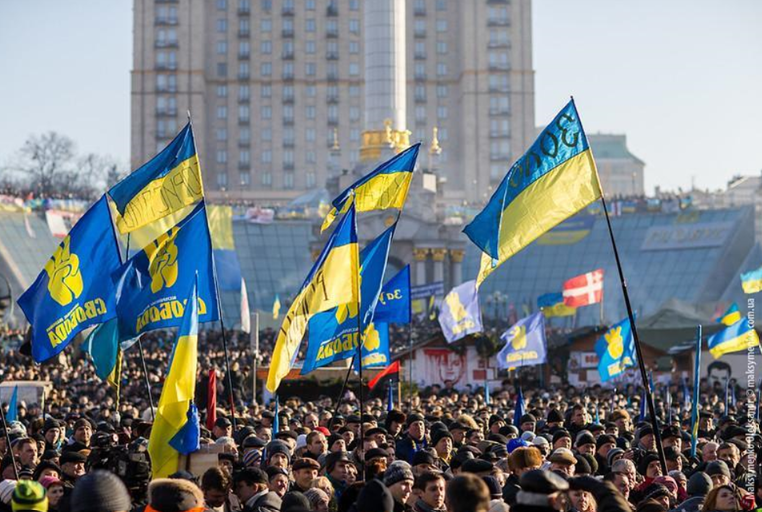 Photo: Flickr.com The change of policy in Ukraine came in 2010 when Viktor Yanukovych was elected president. In November 2013, he refused to sign an agreement on closer ties with the European Union, which caused mass protests in which citizens expressed dissatisfaction with such a decision and asked for his resignation. The demonstrators camped at the Maidan Independence square in Kyiv and occupied the City Assembly and the Ministry of Justice. Protests known as “EuroMaidan” escalated in February 2014, when more than 100 people lost their lives. Yanukovych was eventually ousted and he fled to Russia.